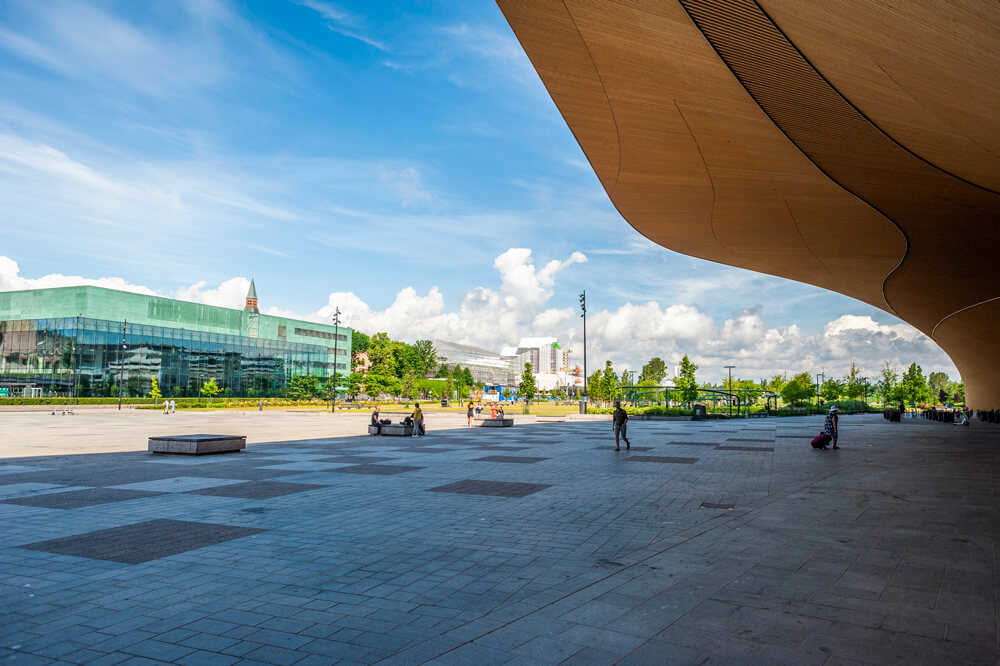
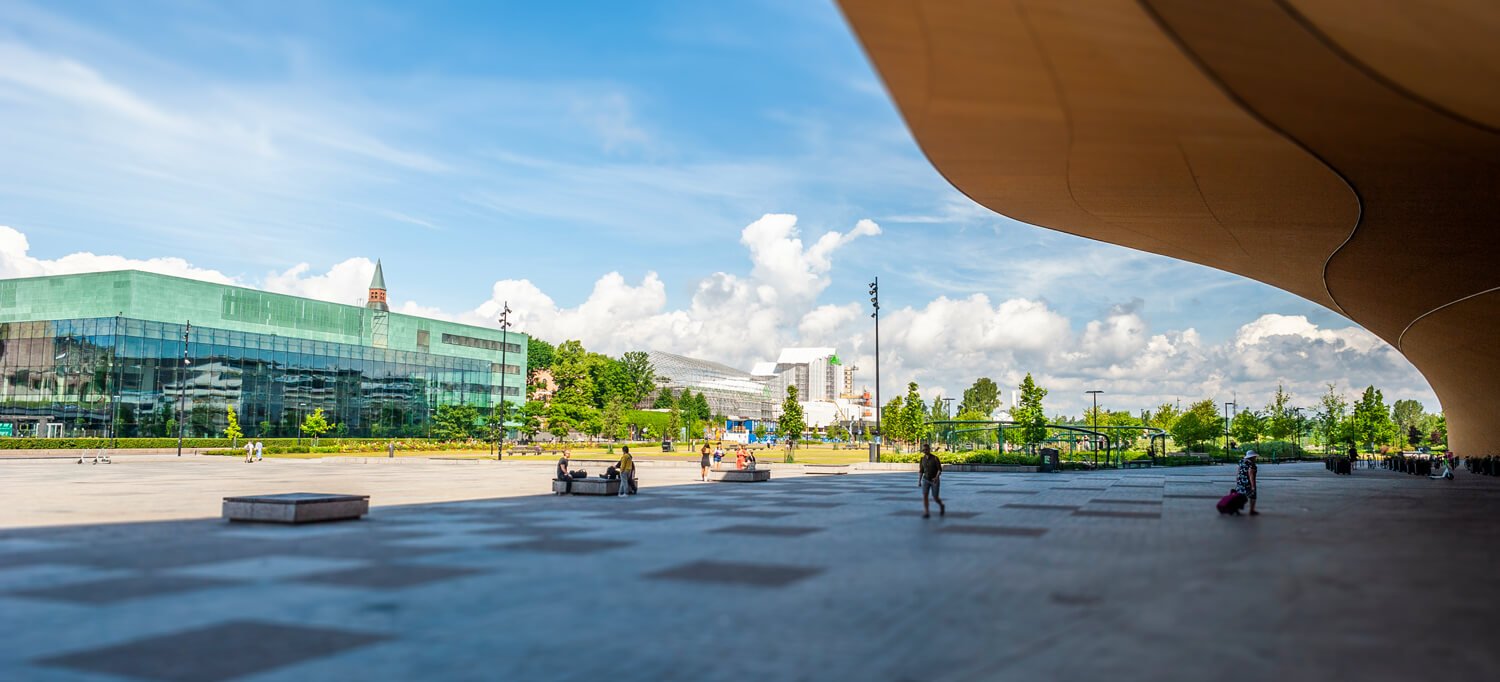
Makasiinipuisto Park and Kansalaistori Square are located in the Kluuvi district. Kluuvi Bay once extended all the way to the Esplanade before it was filled in. The area is bordered by the Music Centre and Kiasmanpuisto Park to the west, the Oodi Central Library to the east, Eero Erkon katu Street, Sanoma House, and the Kiasma Museum to the south, and Töölönlahdenkatu Street to the north.
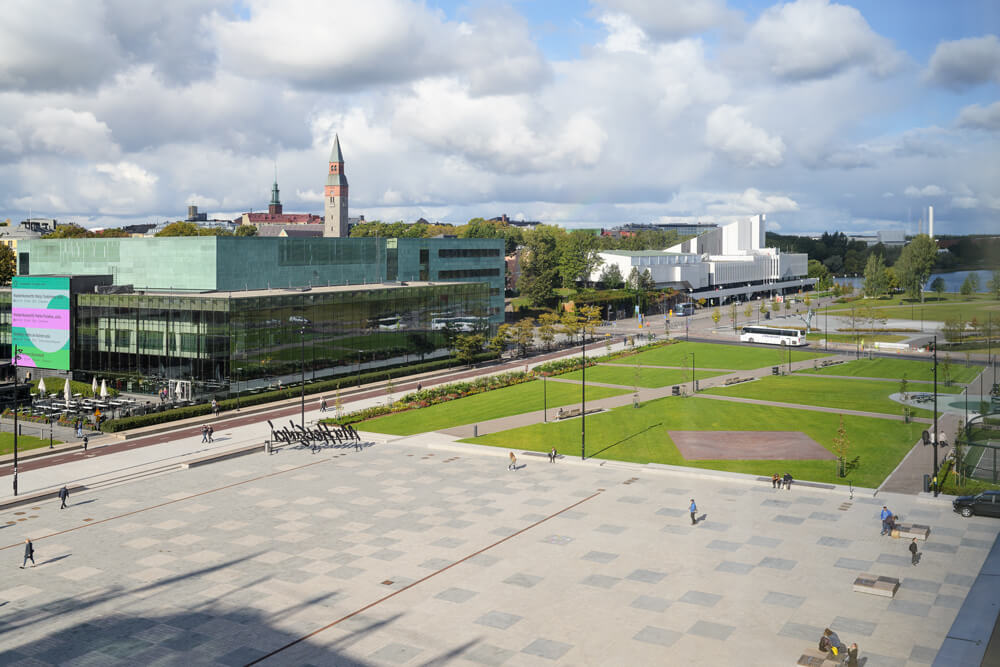
The park and the open Kansalaistori Square are well suited as venues for various events. For example, demonstrations held there are particularly powerful, as the square lies at the very foot of the Parliament House. New Year’s celebrations have also been organized in the square. Across the open lawns stretches a beautiful view framed by prestigious buildings: Kiasma, the Music Centre, Hakasalmi Villa, Finlandia Hall, and the National Opera. From here, Central Park is considered to begin.
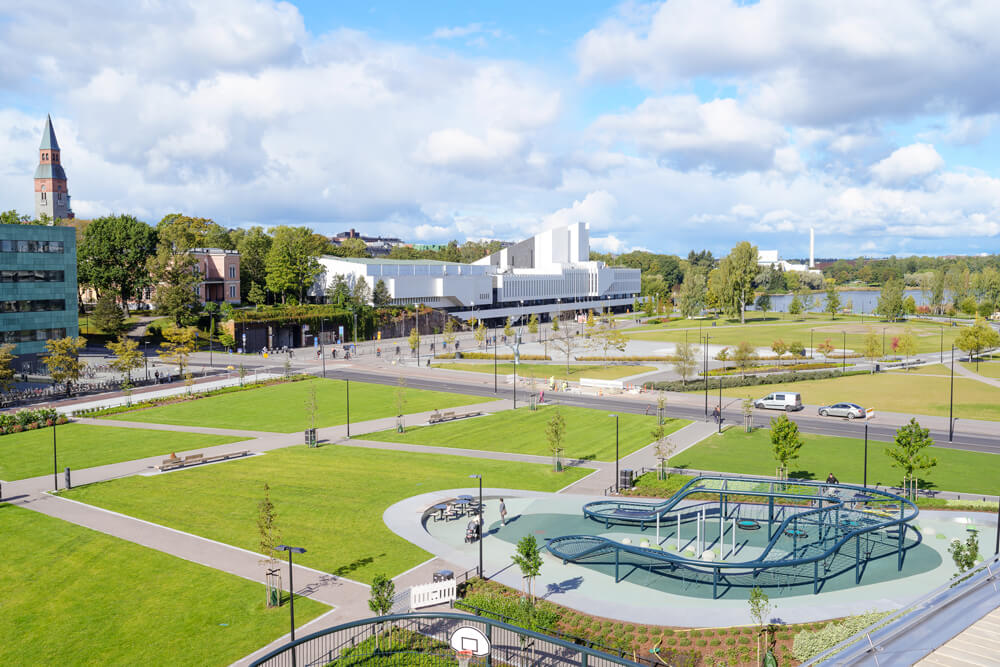
Makasiinipuisto Park
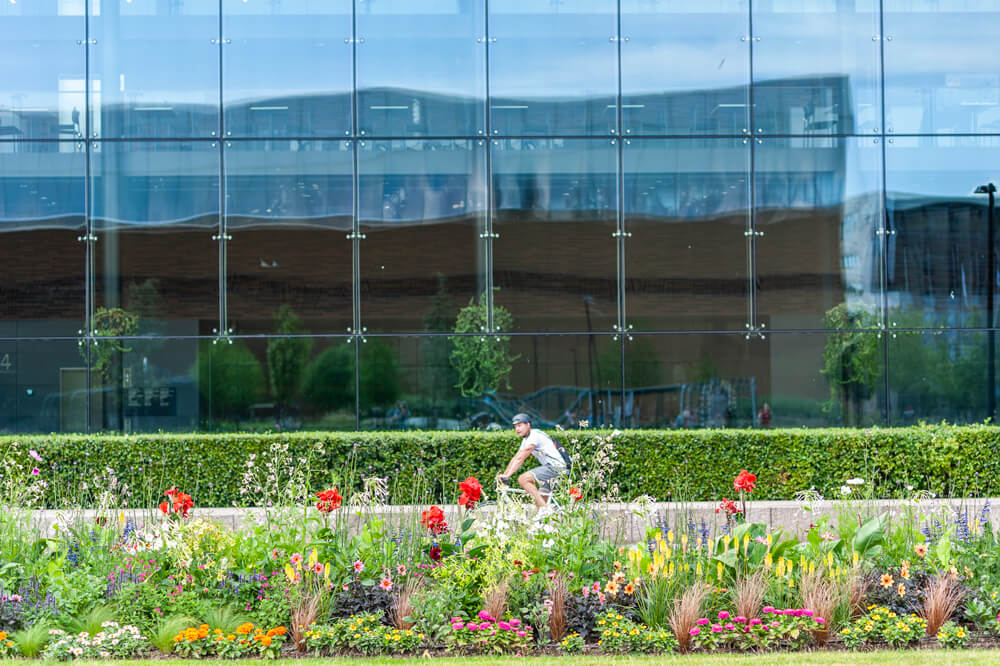
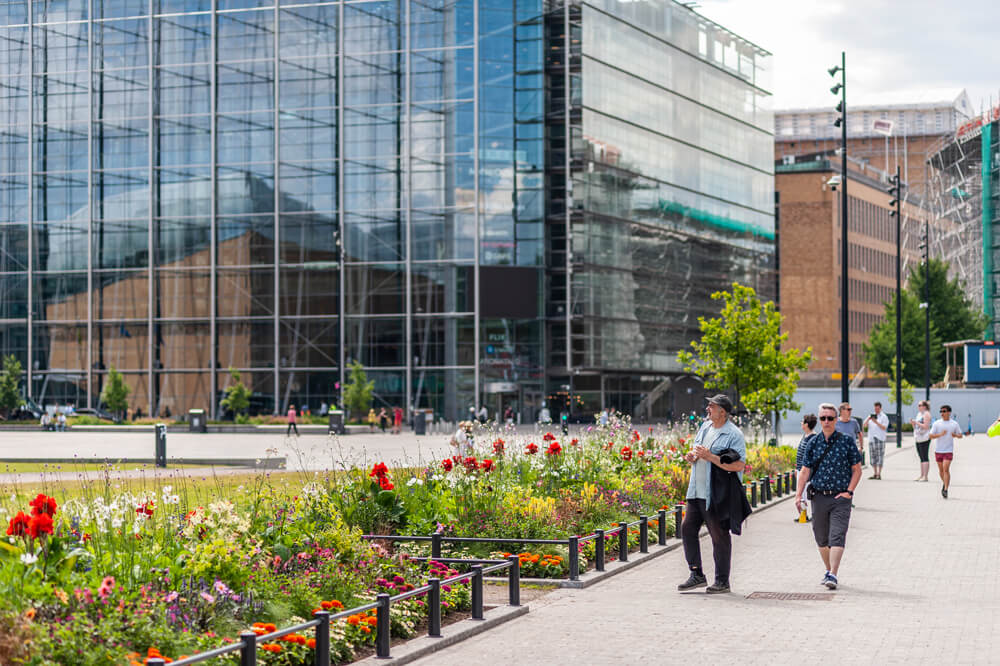
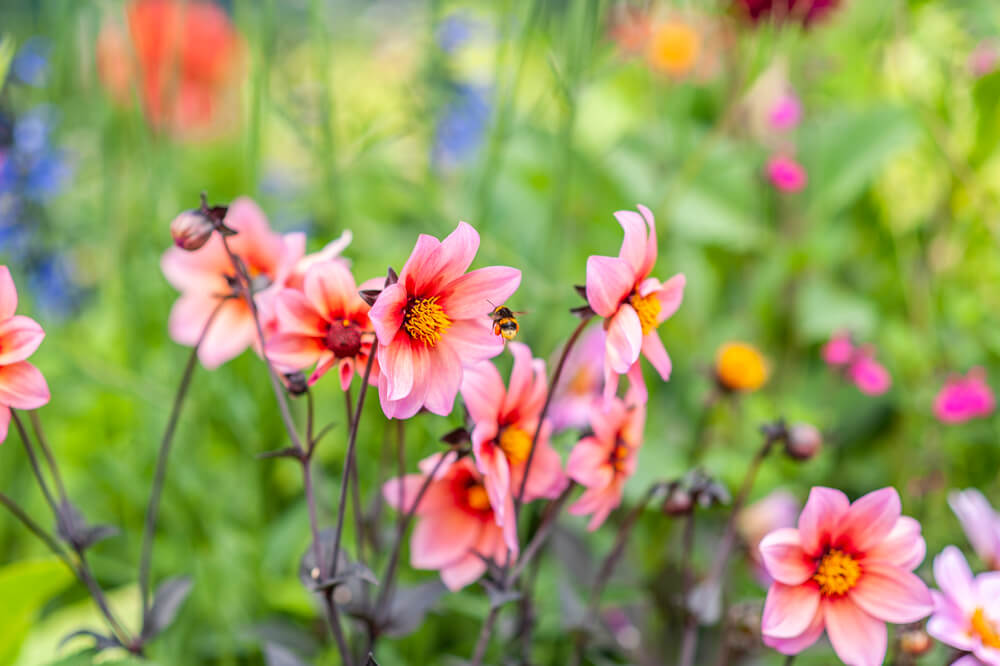
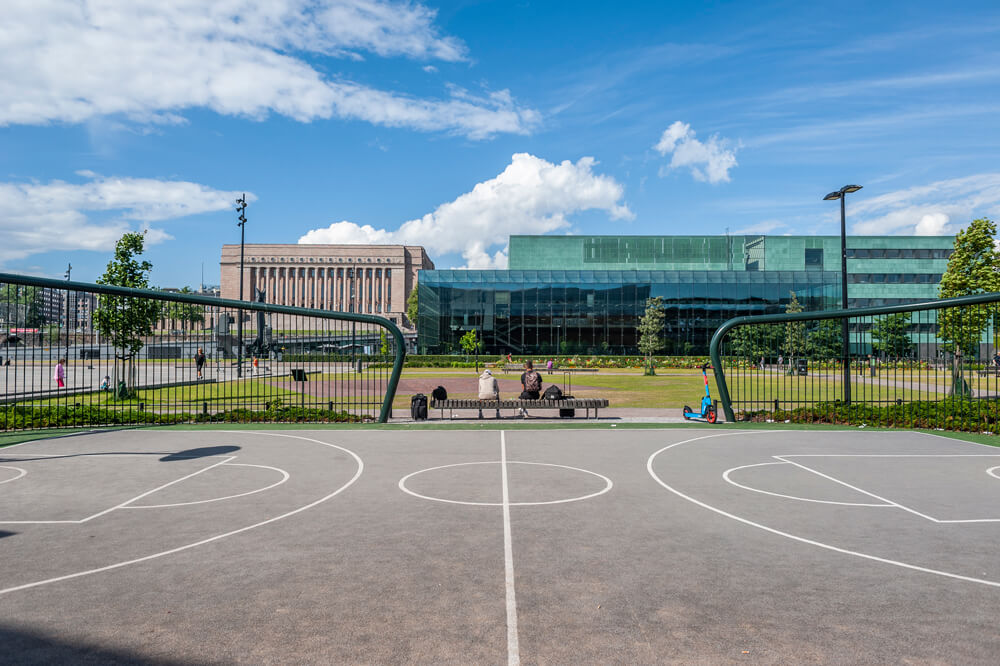
The park consists of open lawn areas punctuated by groups of trees, with stone-dust paths crossing through it. Along the side of the park facing the Music Centre is Helsinki’s most abundant and most photographed display of summer flowers, perennials, and shrubs. It borders a central pedestrian and cycling route and forms a flowering backdrop toward the Music Centre foyer. The eastern part of the park is laid out in a garden-like style. A very popular street basketball court is also framed by plantings.
The plantings in Makasiinipuisto are highly diverse. The shrub beds include evergreen dwarf pines, arborvitae, and low-growing junipers, as well as flowering spirea shrubs with beautiful autumn colors and variegated dogwoods. The park’s tree species consist mainly of deciduous hardwoods: oaks, ornamental cherry trees, maples, bird cherries, and a rare maple that does not yet have a Finnish name, Acer × freemanii ‘Autumn Blaze’.
A children’s playground connected to the activities of the Oodi Library, with climbing nets and slides, has been specially designed for this location. Near the playground there is a small seating area, suitable for example for eating packed lunches.
The northeastern corner of the park is a paved plaza bordered by a row of three street trees. Most of the bicycle parking for the Oodi Central Library is located along the northern and eastern edges of the park. The eastern edge of the park is seamlessly integrated with the surfacing of Oodi’s courtyard, so that the library yard and the park together form a visually unified urban space.
The area is a significant hub for pedestrian and cycling traffic. Cyclists flow along bike paths from the Baana corridor to Eero Erkon katu Street, and along the pedestrian and cycling promenade east of the Music Centre toward Töölönlahti bay. Cross-cutting shortcuts across Kansalaistori Square have been moderated with bollards and changes in level. The main pedestrian and cycling routes along the outer edges of the park are designed to accommodate large numbers of users. The cycle paths are asphalted, and the pedestrian routes are paved with concrete and natural stone.
The park path lighting consists of simple, understated pole-mounted luminaires. All lighting uses LED fixtures with as natural color rendering as possible and white light.
Kansalaistori Square
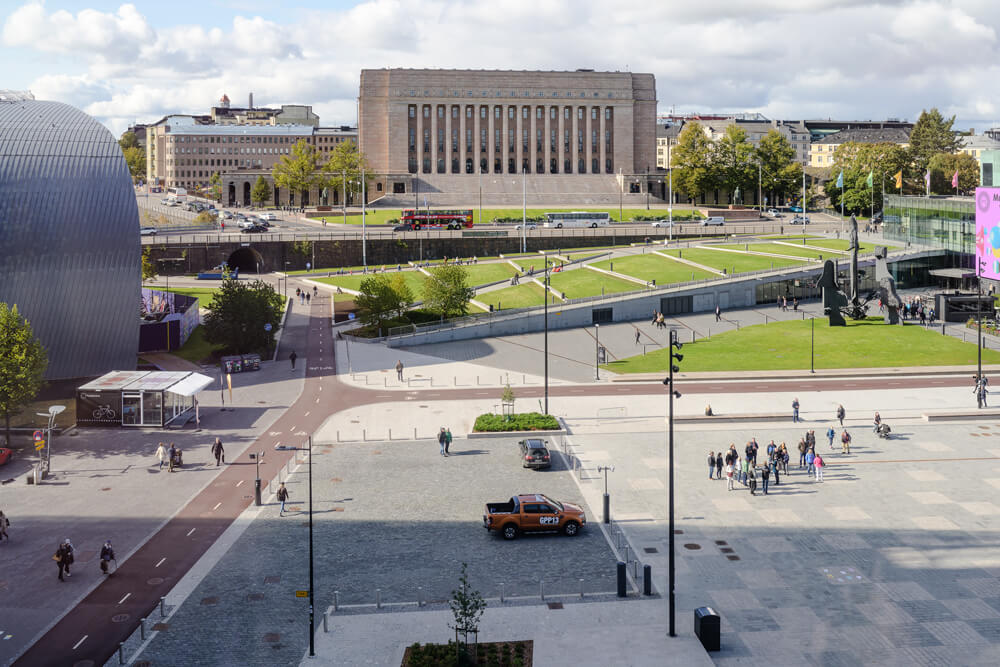
Kansalaistori Square, framed by the courtyards of the Oodi Library, Sanoma House, Kiasma (the Museum of Contemporary Art), and the Music Centre, was designed – true to its name – for event use. The square is surfaced with natural stone paving that echoes the stone pattern of the Central Library’s courtyard. Along the northern edge runs a low natural-stone wall, and along the western side a low seating stair that both defines the square and guides cyclists to use separate cycle paths.
On the library side of the square, a row of massive natural-stone plinths has been placed to delineate the forecourt of the library from Kansalaistori while also serving as seating along the edge of the square. Along the edge facing Sanoma House, a small stage has been created from raised stone blocks.
Across Kansalaistori, there is an unobstructed view from the library toward the Parliament House, as well as a long vista framed by cultural buildings toward Töölönlahti Bay and the city garden. Kansalaistori is equipped for event use with electrical supply points as well as water and sewer connections.
Kansalaistori is lit by pole-mounted luminaires placed along three sides of the square, each with a height of 12 meters. The forecourt of Oodi is illuminated by outdoor lights installed beneath the library canopy. The square is drained by linear drainage channels recessed flush with the paving. Event-time loading and service access to the square takes place via the turning area on Eero Erkon katu Street. Kansalaistori and Makasiinipuisto are fully accessible.